
Barware & retail assortment
How to Build a Cocktail Set Buyers Will Use: Functions, Shaker Fit and Set Value
Build a cocktail set around the drinks and preparation steps it must support. Piece count is a weak buying criterion when it hides duplicate tools, unclear capacity or a shaker that is awkward to open. Define the user, map the essential functions and compare the complete set before adding presentation extras.
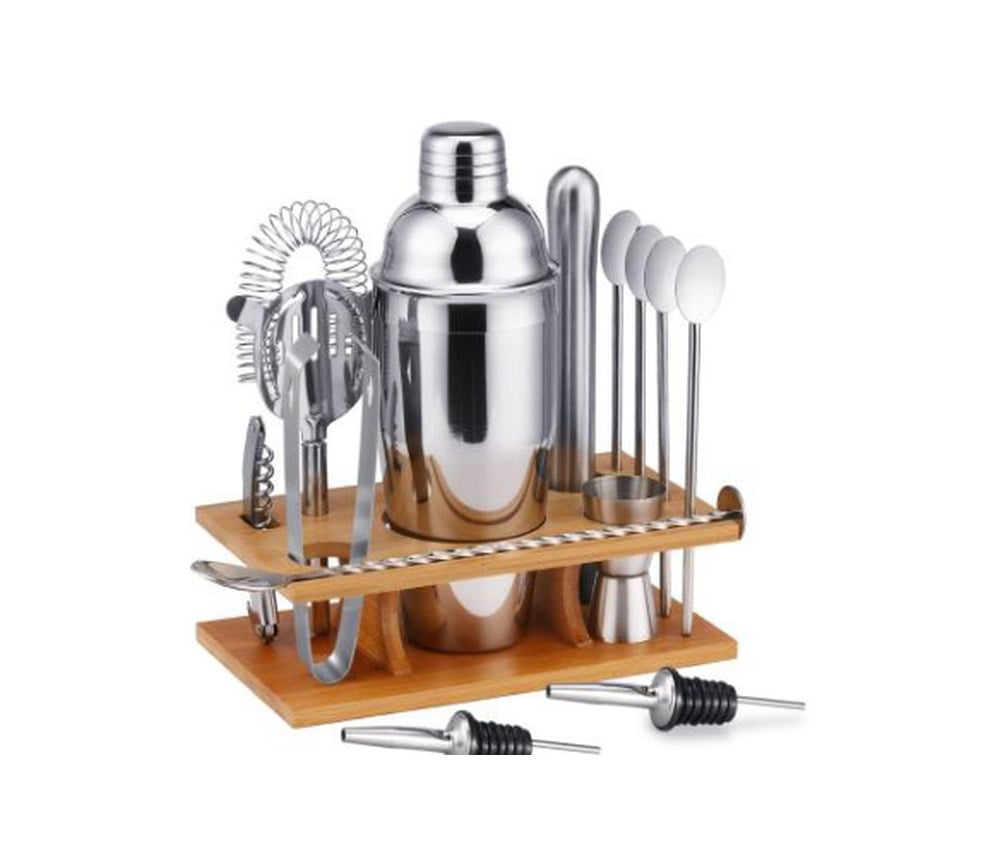
Key takeaways
- Count useful functions separately from physical components and packaging pieces.
- Review shaker capacity, assembled fit and opening as different questions.
- Evaluate the complete finished set, including matching, handling, care and accessory storage.
- Use a stated set-content list and a realistic preparation sequence to decide which extras earn their place.
Define the user and the drinks before choosing the set
A home beginner, a frequent host and an experienced cocktail enthusiast do not need the same buying proposition. A first-time user may value clear instructions and an uncomplicated preparation sequence. A hobbyist may prefer a flexible set of separate tools. A gift purchaser may care about presentation, but the recipient still needs to understand how the items work together.
Write down several representative drinks or preparation tasks without turning the range into a recipe collection. Identify whether the user must measure, shake, stir, strain, muddle or serve ice. Ask which functions must be possible using only the items included in the box, and which everyday household items the instructions may reasonably assume. Make those assumptions visible to the merchandising team.
Choose an achievable promise for each retail tier. An entry set can offer a coherent core of tools without claiming to be a complete home bar. A larger gift set can add useful serving or storage features. The important distinction is whether the extra items improve the intended experience. Adding another small accessory simply to increase the number on the front of the box creates a poor basis for comparison.
Avoid silently importing requirements from commercial bar service into a consumer gift set. The duty cycle, intended user skill and cleaning environment may differ. If the buying brief actually targets hospitality, state that at the start and ask for a product-specific review. A good-looking retail reference is not proof that the same configuration is suitable for intensive professional use.
Build a function map and an unambiguous component count
Create two lists. The first is the physical bill of contents: every item, its quantity and its identifier. The second is the function map: what the set lets the user do. A shaker assembled from several pieces may contribute several physical components but still perform one main preparation function. A display stand adds organisation, not another drink-making action.
| Function | Buyer decision | Sample question |
|---|---|---|
| Measure | Required measure sizes and how they are identified. | Are markings readable and supported by the agreed volume check? |
| Shake | Shaker format, intended fill and handling sequence. | Does the complete assembly fit, hold and open as intended? |
| Stir and strain | Tools required by the chosen preparation examples. | Do the selected pieces work with the nominated vessel? |
| Muddle or grip | Whether these tasks belong in the consumer proposition. | Can the user control the tool without awkward contact points? |
| Store and display | Stand, organiser or compact packing arrangement. | Can every included item be removed and returned conveniently? |
Agree the counting convention before packaging artwork. If the stand is counted, say so in the contents list. If a shaker lid and cap are separate counted components, avoid language that suggests the customer receives that many independent tools. Illustrate the included parts with a labelled contents diagram. This also helps packing staff identify omissions and customer service understand a reported missing item.
Use the function map to remove redundancy. Two accessories with different silhouettes may still perform the same role for the target user. Conversely, a small missing tool can make the advertised preparation sequence inconvenient. Ask the product team to perform each nominated sequence using the exact proposed set, then record which outside tools were required.
Review shaker format, capacity and fit together
The MINKO MK260027 reference is a two-tin Boston Cocktail Shaker Set. Its product page lists 750 ml and 600 ml shaker tins. Those are useful catalogue identifiers, but adding them together does not establish an assembled working capacity. The actual overlap, intended fill and required headspace need to be considered in the selected assembly and instructions.
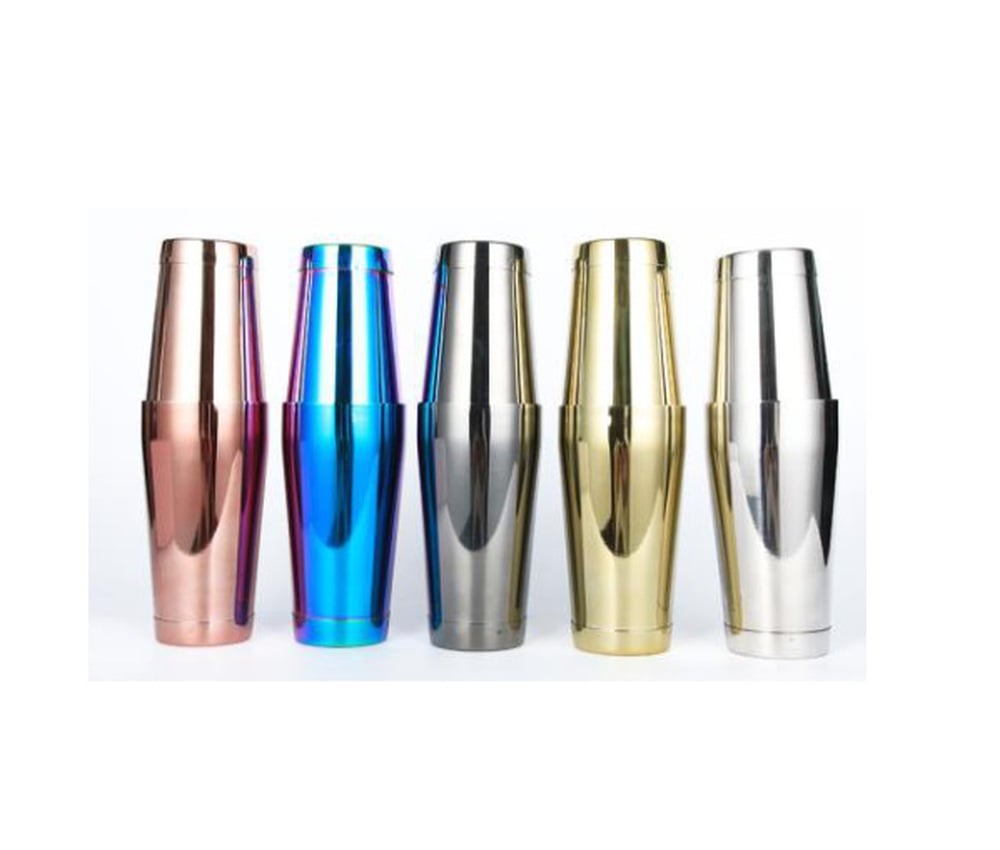
Ask the supplier to distinguish nominal vessel capacity, any stated brimful measurement and recommended working fill. Where capacity is a retail claim, agree the measurement method and acceptance criterion. A photograph of a large vessel is not a substitute for a documented capacity basis, and a liquid-only fill check does not demonstrate the handling of an ice-containing mixture.
Review fit as a sequence rather than as a single leak check. The user aligns the parts, closes the shaker, holds it, shakes, sets it down and opens it. Assess whether the selected sample performs the intended sequence consistently under agreed conditions. Document how it was assembled. A forced closure that prevents leakage but makes ordinary opening impractical is not a balanced solution.
A design with an integrated straining lid may simplify the number of separate tools for some users. A two-tin format may suit a different preparation preference. Treat those as alternative user experiences, not a universal quality ranking. Compare the instructions, included straining tools, cleaning access and storage arrangement alongside the shaker itself.
The finished surface matters to the fit review. Request evaluation of the actual selected finish and branding location, especially near interfaces or hand contact areas. An undecorated early sample cannot settle every question about a later decorated version. Record any approved change and identify which handling checks must be repeated.
Specify materials, finish and care without relying on adjectives
Terms such as stainless steel, premium and professional leave too many decisions open. Ask for component-level material identification, construction details and the selected finish. Do not assume every accessory uses the same material grade or production route because the items look alike. A coordinated set may come from different manufacturing partners and requires an agreed visual reference.
Create one finish board or approved physical reference for visible parts. Compare colour, gloss, brushing direction and the appearance of adjacent items under consistent lighting. A minor difference may be acceptable between hidden components but distracting between two tools displayed together. Establish examples of acceptable variation rather than demanding an undefined perfect match.
Inspect rims, joins, edges, handles and the stand interface for the selected product. Mark areas that need special attention because they contact hands or other pieces. Define the actual defect in the review: roughness on a grip area, a visible finish mismatch, an unreadable marking or an accessory that does not seat in its allocated opening. These descriptions support corrective decisions.
Ask for care instructions supported for the complete finished item. Decoration, adhesives, grips and stand materials can make the assembled product’s care requirements different from those of an undecorated metal component. Do not add dishwasher-safe, corrosion-proof or scratch-proof claims by inference. Where such performance is commercially important, agree how it will be evaluated before choosing the wording.
For barware intended for food or drink contact in the EU, the European Commission identifies the general food-contact framework and good manufacturing practice requirements, with additional rules depending on material and country. This is a reason to define the actual component materials and intended use, not a claim that a catalogue product is certified. Have the relevant specialist establish the product-specific evidence required for your destination. See the Commission’s food contact materials guidance, checked on 22 September 2026.
Compare complete-set value and the space it consumes
Consider the cost of the usable proposition, not the cost divided by the headline piece count. The comparison should include the quoted tool configuration, stand if applicable, instructions, retail pack and any separately priced development work. Record exclusions. A basic set with clear instructions can be a stronger offer than a larger set whose contents feel unrelated.
Shelf frontage can make a display stand expensive even when its purchase cost looks modest. Ask the retailer how much shelf width is available and how many facings each version needs. Check the assembled display dimensions as well as the closed retail pack. Online sales require another view: how clearly can a customer understand scale, contents and storage from the approved images?
Distinguish merchandising value from packing efficiency. A larger box may communicate gifting value but consume more display space; a smaller box may be easier to stock but need a clearer contents image. Neither is automatically right. Decide which selling channel leads the brief and ask for a specific alternative where a second channel has materially different requirements.
Avoid treating a decorative finish as a free change. Ask which parts are included, whether the same appearance can be maintained across them and what sample confirmation is required. If only the principal shaker is decorated, show that accurately. The objective is a coherent promise that matches the selected configuration and quotation.
Worked example: choose a core set or a stand-led gift set
Worked example · Illustrative scenario
Assume a retailer is planning 2,400 cocktail gift sets. Option A is a compact core set with a hypothetical packed width of 18 cm and a comparable unit purchase cost of USD 8.40. Option B adds a display-led arrangement, with a hypothetical packed width of 24 cm and a cost of USD 10.10. Both prices include the assumed retail pack; freight, tax, testing, development and other charges are excluded equally. These figures are not MINKO quotations or dimensions.
The retailer has a 120 cm shelf segment and wants one row of forward-facing packs. Ignoring gaps for this initial calculation, six Option A packs fit across the segment because the whole-number part of 120 ÷ 18 is six. Five Option B packs fit because 120 ÷ 24 is five. Actual planogram clearance and shelf-edge requirements must still be checked.
| Assumed measure | Option A: core set | Option B: display-led set |
|---|---|---|
| Purchase value for 2,400 sets | 2,400 × USD 8.40 = USD 20,160 | 2,400 × USD 10.10 = USD 24,240 |
| Additional purchase value | Baseline | USD 4,080 above Option A |
| Packs across an assumed 120 cm shelf | 6, occupying 108 cm before gaps | 5, occupying 120 cm before gaps |
| Decision to validate | Does the core set support the promised functions? | Does display value justify extra cost and space? |
The buyer does not decide solely from that arithmetic. It first maps the preparation functions for both configurations, checks any accessory duplication and runs a complete user sequence. It then compares the stand’s stability, item retention and removal access. Next it trials the actual packs in the store fixture and asks the merchandising team whether the larger gift presentation supports the intended retail position.
If the stand contributes meaningful storage and the channel values presentation, Option B may remain appropriate. If it mainly increases piece count and shelf width, the compact core may better serve the brief. A third route is to offer the stand separately, but that introduces another item and requires its own demand and packing decision. The worked example assumes no retail selling price, margin improvement or sell-through result.
The expected outcome is a documented choice between two different consumer propositions, with the incremental USD 4,080 and frontage trade-off visible. This is not evidence of a completed MINKO programme. It shows why a buyer should combine functional review with simple commercial arithmetic before approving a set.
Use a complete-set review before approving the retail story
Review a sample packed exactly as the proposed retail version. Start with the box closed and the instructions unread. Can a new user identify the contents, understand the intended sequence and find the care information? Then remove every component and compare it with the approved contents list. Keep styling props separate from supplied accessories.
Perform the agreed preparation sequence with appropriate controls and supervision. Record assembled fit, handling, markings, stability and opening. After use, follow the proposed cleaning instructions and assess whether the parts can be accessed, dried and returned to their storage positions. Any claimed repeated-use or cleaning performance needs an agreed evaluation scope beyond a single demonstration.
- Confirm every component and quantity against a labelled list.
- Check the selected finish across pieces viewed together.
- Distinguish nominal capacities from the intended working fill.
- Review shaker assembly, holding, opening and care as one sequence.
- Verify each stand opening or storage position with the actual accessory.
- Match packaging claims and pictures to the approved finished set.
When a component changes, identify the consequences across the set. A replacement spoon may fit the carton but not the stand; a revised shaker may alter the instructions or the insert. Keep one controlled set specification and send the affected updates to product, packaging and inspection teams together.
Use MINKO’s references to build a focused enquiry
MINKO lists MK260069 as an 11-piece cocktail set with a stand and MK260027 as a two-tin Boston format. These are useful starting points for comparing a coordinated gift presentation with a compact shaker-led direction. MINKO coordinates development and sourcing with independent manufacturing partners; it does not need to own the factories to help connect the component, finish and packaging decisions.
Send the reference numbers, intended user, preparation functions, estimated quantity and target sales channel. Ask for the current contents list and product-specific specifications before requesting an alternative. If you want a logo or colour finish, identify the exact parts and application locations. Add your retail pack size constraints and destination requirements so the proposal can be reviewed on a complete basis.
Frequently asked buying questions
Does a higher piece count mean better value?
Only when the additional pieces serve the user and are clearly counted. Compare independent functions, complete contents and the usefulness of storage or presentation features. A large number can otherwise obscure duplication.
Can the two tin capacities be added to state serving capacity?
No. That sum does not account for the assembled overlap or working headspace. Establish the capacity wording and intended fill for the actual shaker assembly and use instructions.
Should every accessory have the same finish?
A coordinated appearance may suit the retail brief, but define it deliberately. Some mixed finishes can be intentional. Approve the combination on real samples rather than assuming separate catalogue images will match.
Can we add an ice bucket to the gift set?
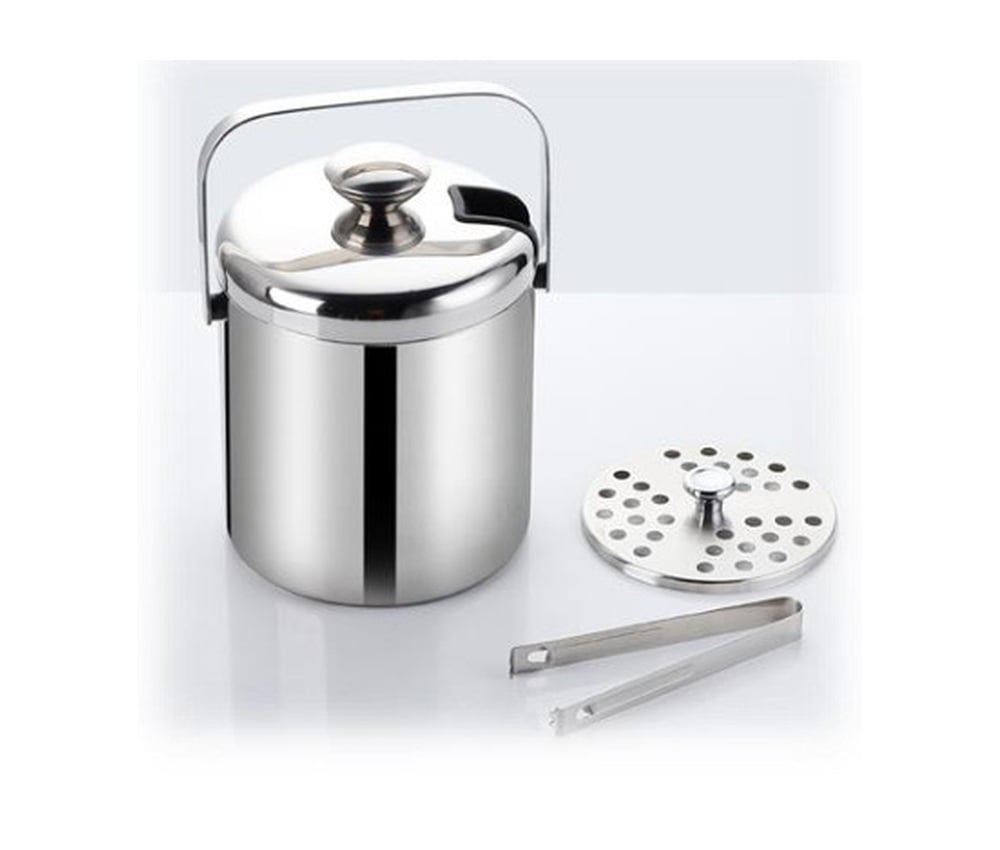
Discuss it as a distinct configuration with its own intended role, dimensions and packaging needs. A separate serving item changes the proposition substantially and should not be treated as a minor piece-count upgrade.
What is the most useful first enquiry attachment?
A one-page function and contents map with your preferred MINKO references. It gives the sourcing team a clearer basis than a target price and a desired number of pieces alone.
Build the set around your customer’s first use.
Send MINKO your preferred shaker or set references, intended user, required functions, quantity and pack constraints. We can coordinate options, component confirmation and sample discussions for a coherent barware range.
Discuss Your Product Brief ↗