
Bath & personal-care accessories
Buying Silicone Bath Accessories: Design for Grip, Cleaning and Clear Instructions
Buy silicone bath accessories by the complete use cycle: identify, hold, use, rinse, dry and store. A soft-looking surface or attractive colour is not enough to demonstrate a practical product. Review the actual texture, grip, hanging arrangement and care instructions before approving a coordinated bathroom range.
Key takeaways
- Separate a product’s visible design features from claims that require evidence.
- Review grip, texture, cleaning access and drying arrangements as connected decisions.
- Assign a distinct use to each item in the range so similar brushes do not become unnecessary duplicates.
- Confirm actual colour, material composition, dimensions and care requirements for the selected option.
Use the bathroom routine as the product specification
A silicone accessory can be easy to display yet awkward to use once hands are wet, a surface is slippery or storage space is limited. The buyer’s job is to translate the intended routine into requirements that a supplier can demonstrate. Begin with the user’s task, the contact area, the way the product is held and the place where it will be left after use.
Write a simple sequence for each candidate: take it from storage, identify the intended face or part, apply the relevant preparation, use it, rinse it, remove retained residue and put it somewhere to dry. Do not assume that the shopper has a large hook, a dedicated tray or space to keep several tools separated. Those assumptions may make a catalogue composition look more practical than the eventual bathroom arrangement.
For a coordinated collection, separate cleansing tools from organisational accessories. A dispenser name tag does not need the same texture or gripping behaviour as a hand-held cleansing pad. It needs readable wording and a compatible attachment arrangement. Giving every item the same material family and colour does not remove those functional differences.
This guide concerns buying and product-development questions for bathroom accessories. It does not recommend a treatment, establish dermatological suitability or validate medical, antimicrobial or skin-performance claims. Keep those separate from ordinary descriptions of visible product features. If such claims are central to the intended product, involve the appropriate specialists before choosing the design and packaging language.
Evaluate texture and grip on the selected construction
Ask for a drawing or clear specification identifying the working surface, grip, loop and any joined parts. Record overall dimensions and the relevant feature dimensions. Two pads with similar outlines can behave differently because of the texture geometry, backing thickness or grip arrangement. Rather than choosing an isolated hardness value from habit, ask how the proposed construction supports the intended handling requirements.
Compare samples with the same evaluation method. Define how the product will be held, what condition it is in and what actions the reviewer performs. For a wet-use grip review, use an agreed representative setup and record the observations. Avoid turning an informal preference into a broad promise that the item is slip-proof or suitable for every user.
Inspect the texture where it meets the backing and around the edges. Ask how moulding variation, excess material or an uneven surface will be judged. A photographic defect reference can be clearer than a general instruction to make the finish smooth. The sample review should distinguish intentional texture from an unintended feature that changes the feel or catches during handling.
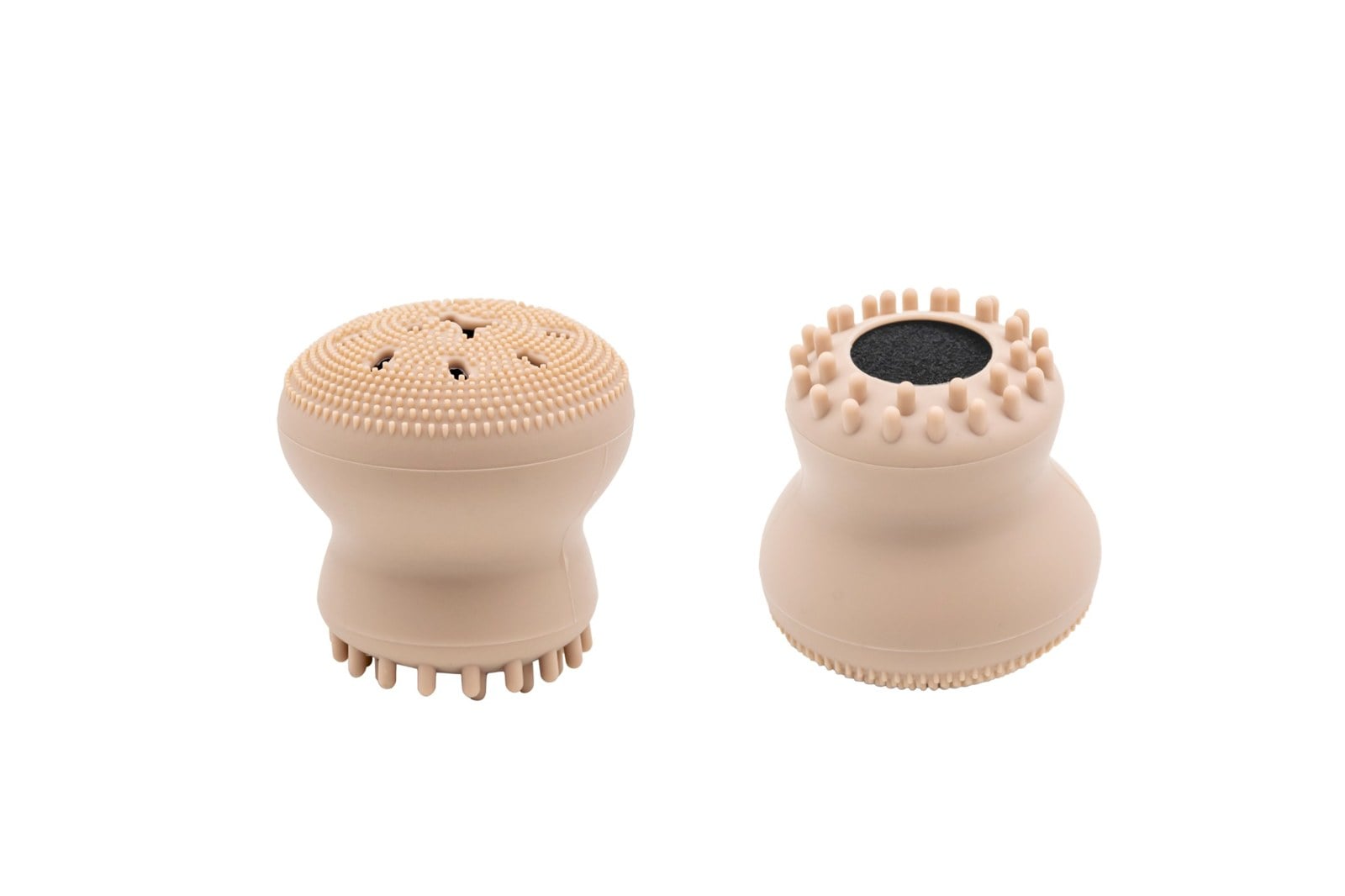
If a product has two working faces, establish what each face is for and how the customer identifies it. The MINKO MK-SI114 reference is shown with a fine textured face and a contrasting larger-bristle face. That visible difference supports a design discussion; it does not by itself prove which face is suitable for a particular person or establish a tested performance hierarchy.
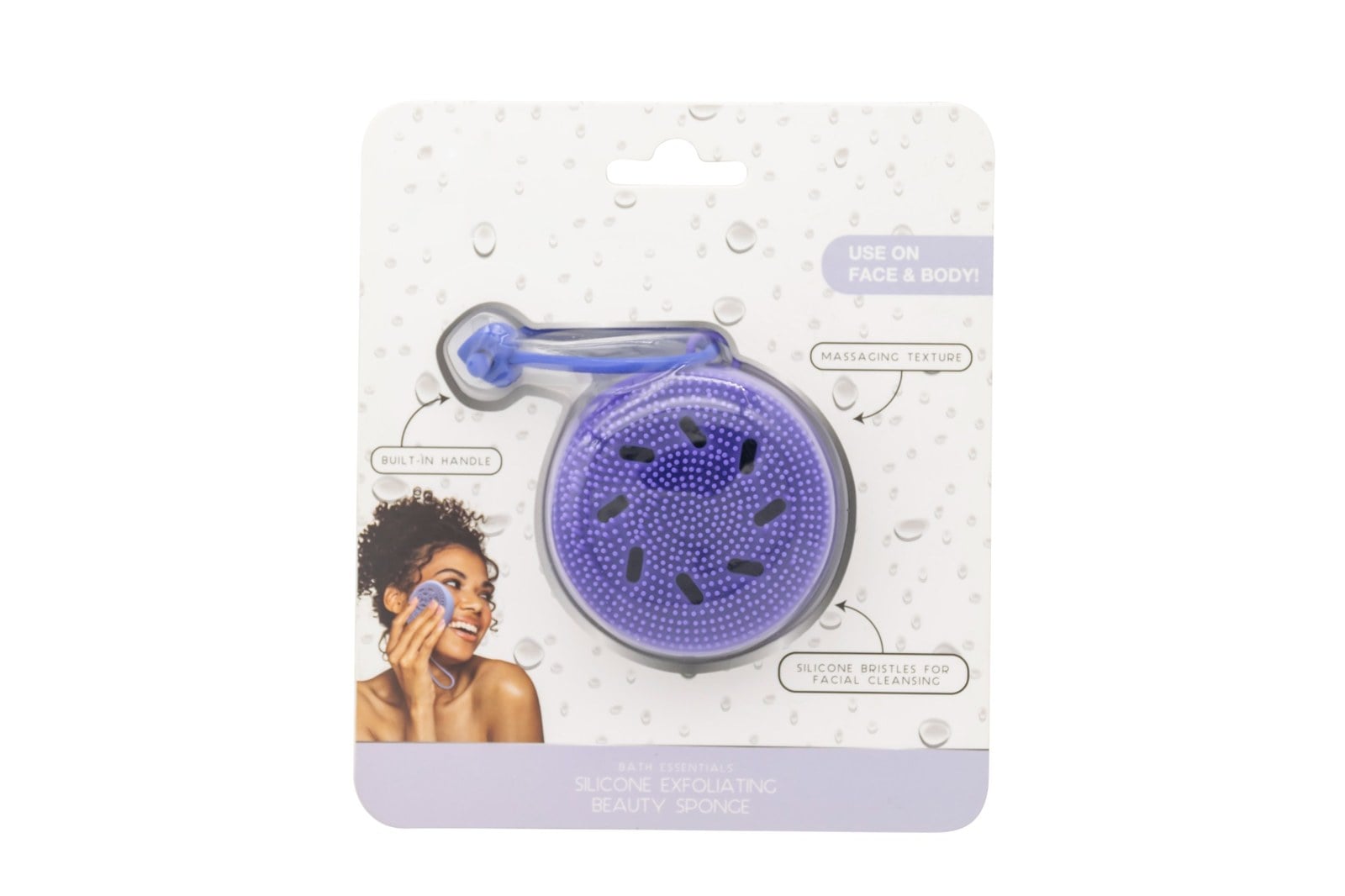
Consider whether the grip is accessible to the intended users. A finger pocket, strap or handle can reduce the need to pinch an edge, but the opening and surrounding shape must fit the intended use. Ask for feedback using the proposed instructions and record which hand positions were comfortable or awkward. If the intended audience includes specific accessibility needs, define them explicitly rather than making a universal comfort claim.
Treat cleaning and drying as design questions
A care instruction should describe something the consumer can realistically do with the actual item. Examine whether residue can remain between closely spaced features, beneath a grip or inside a join. Ask how those areas are reached and how the reviewer will determine that the cleaning method is practical. Do not infer that a product is self-cleaning from its material name.
Review the proposed rinse and care sequence with representative residue under an agreed method. Record the preparation used, application amount, cleaning steps and observations. This can help compare constructions, but an internal practical review is not an antimicrobial study or proof of a health benefit. Keep the scope of the observation visible in the development record.
A hanging loop is useful only when it works with the intended support and allows the product to hang as expected. Check the loop opening, the way the item sits against a wall and the clearance around the working surface. If the product hangs with its textured face pressed flat against another surface, reconsider the arrangement before describing it as a convenient drying solution.
Where drying speed matters, ask for a defined comparison method. Ambient conditions, the amount of remaining water and the hanging position can change what is observed. A single photograph of a dry sample cannot establish a fast-drying claim. The buyer may instead prefer a narrower, directly supportable instruction describing the recommended storage position after cleaning.
Check any detachable parts both apart and assembled. Can the user identify how to remove and refit them? Can a piece be lost during cleaning? Does the packaging accurately show what is included? A construction with fewer parts may be easier to explain, while a separable part may improve access. Choose according to the use case and the evidence from the selected sample.
Give every item in the range a distinct role
A coordinated colour palette is an invitation to buy a range; it is not a reason to include several nearly identical accessories. Assign each candidate a role that can be explained in one sentence. For example, a hand-held cleansing reference offers one direction, a dual-face brush offers another texture arrangement, and dispenser tags support bathroom organisation.
| Reference direction | Visible catalogue basis | Buying question to resolve |
|---|---|---|
| MK-SI98 cleansing pad | Round textured pad with integrated hand grip and hanging loop. | Does the selected grip and hanging arrangement suit the intended routine? |
| MK-SI114 bath brush | Fine textured face and contrasting larger-bristle face. | Are the two faces useful and clearly explained for the intended use? |
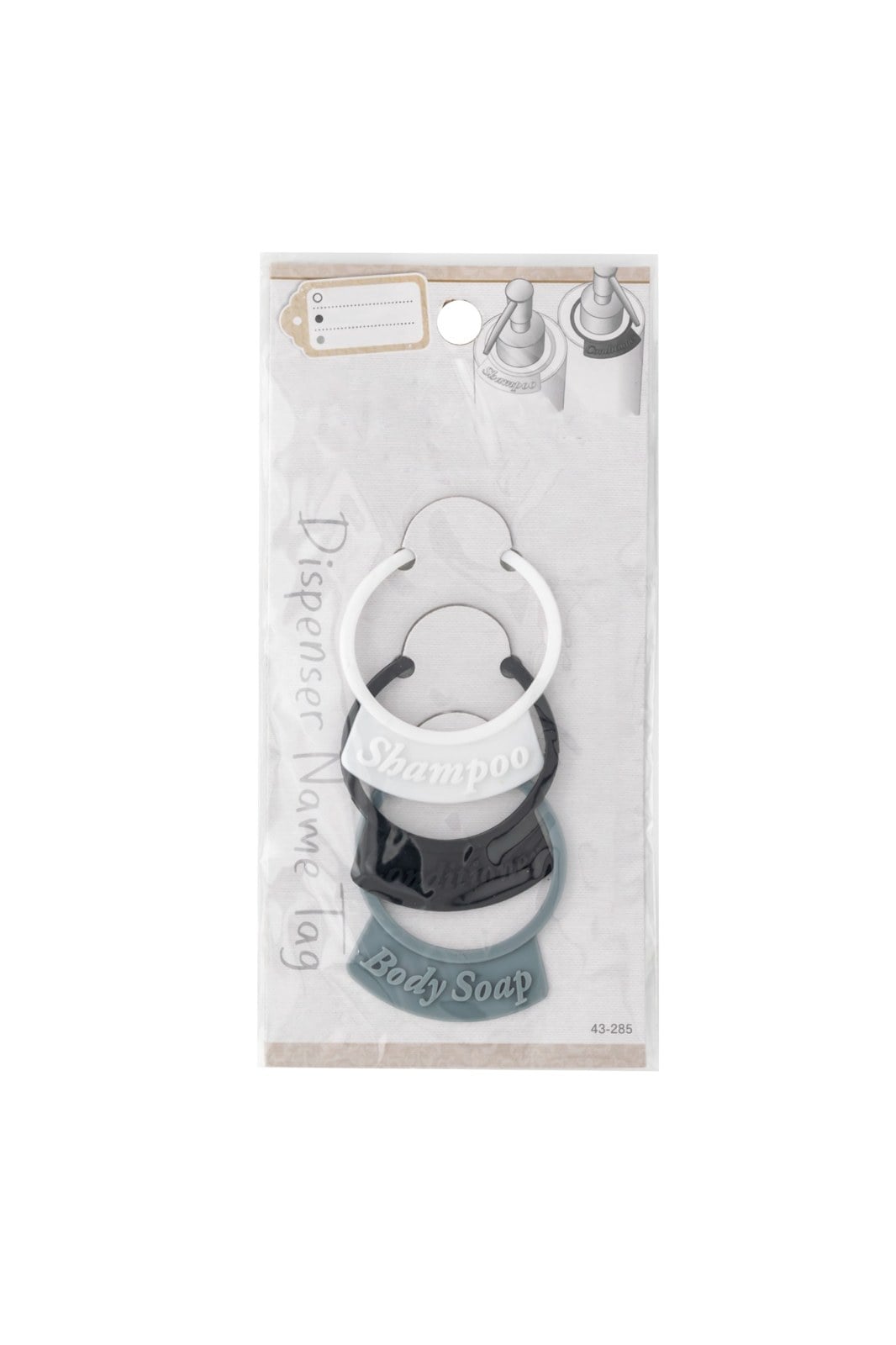
| MK-SI97 dispenser tags | Ring-style tags labelled Shampoo, Conditioner and Body Soap. | Are the attachment fit and wording appropriate for the selected dispensers and market? |
The product pages present reference options, with dimensions, material composition and performance requirements to be confirmed for the selected configuration. Do not read photographs as evidence of stock availability, exact colours or a fixed MOQ. Send MINKO the model references and the role you want each product to perform, then request current specifications and samples on that basis.
Think about where the items will be merchandised. A cleansing accessory in a personal-care aisle may need different explanations from an organisational tag in a household storage range. If they are grouped in one promotion, use distinct labels and show the intended task for each item. Similar packaging should help navigation rather than make products harder to tell apart.
For dispenser tags, ask about the actual bottle-neck dimensions and installation route. A ring that passes over a detached pump may not pass over the assembled head. The tag should not obstruct the pumping action or cover necessary bottle information. Label readability matters too: confirm language, contrast and orientation on the selected bottle rather than on a flat artwork proof alone.
Control the words and colours that reach the shelf
Keep an evidence column beside every proposed claim. Directly observable descriptions might include a hanging loop or two textured faces. Statements about cleaning performance, service life, skin benefits, material purity or environmental outcomes need their own support and scope. Ask what the evidence actually covers, which version was assessed and whether any later change affects its relevance.
For US advertising, the Federal Trade Commission explains that claims must be truthful, non-deceptive and evidence-based. That principle supports a disciplined claims review; it does not mean this guide establishes a product’s compliance. Review wording for every destination market and sales channel. See the FTC’s advertising and marketing basics, checked on 22 September 2026.
For colour coordination, agree a physical reference and view actual samples together. Product thickness, texture and lighting can change how a colour appears to the eye. A shared colour name in three quotations does not ensure that the displayed items will look coordinated. Record acceptable visual differences and inspect the final chosen combination before approving photography.
State where branding will appear and whether it is moulded, printed or added to the packaging. Ask the supplier to propose an appropriate route for the selected construction, rather than promising a method before feasibility is confirmed. Review whether the marking remains readable in its intended position and whether the application affects a working surface, grip or care requirement.
The final retail pack should identify the item, included parts, intended use and agreed care instructions clearly. Avoid making broad health or hygiene language the main selling point when the verified value is functional design. A precise explanation of grip, organisation or storage can give shoppers a useful reason to buy without relying on unsupported performance claims.
Worked example: reduce colour complexity while keeping a coherent range
Worked example · Illustrative scenario
Assume a buyer plans three accessory designs at 3,000 units per design, for 9,000 units in total. The initial proposal uses three colours for every design, producing nine design-colour combinations at 1,000 units each. The buyer’s priorities are a coordinated neutral presentation, clear product roles and a manageable first launch. No sales forecast or supplier minimum is assumed.
The supplier discussion identifies a hypothetical colour-development and approval charge of USD 120 for each design-colour combination. Under that assumption, nine combinations require USD 1,080. Restricting the first launch to two colours per design creates six combinations at 1,500 units each and USD 720 of those charges. The arithmetic difference is USD 360; it is not an established MINKO fee or a forecast saving.
| Illustrative planning measure | Three colours per design | Two colours per design |
|---|---|---|
| Designs and total quantity | 3 designs; 9,000 units | 3 designs; 9,000 units |
| Design-colour combinations | 3 × 3 = 9 | 3 × 2 = 6 |
| Equal quantity per combination | 9,000 ÷ 9 = 1,000 | 9,000 ÷ 6 = 1,500 |
| Assumed USD 120 approval charge each | 9 × 120 = USD 1,080 | 6 × 120 = USD 720 |
The buyer has three options. It can keep all three colours and accept the additional approval work, launch two colours across the range, or give different designs different colour counts based on channel demand. The third option may be commercially sensible but requires a clearer assortment plan. Reducing colours should not be automatic if it removes a variant the retailer expects to sell.
For this scenario, the team chooses two colours as a development direction, subject to commercial confirmation. It then reviews the three designs together, assigns distinct use descriptions and checks the actual selected samples. The tag is reviewed on the nominated dispenser, the pad with its proposed grip and hanging arrangement, and the dual-face brush against its planned instructions. These steps are different because the products perform different jobs.
The buyer requests current minimum quantities and a revised quotation for 1,500 units per design-colour combination. It also checks whether colour charges really apply per combination or whether any can be shared. The hypothetical USD 360 difference is retained only if the supplier’s actual charging basis supports it. Unit prices, testing, packaging and delivery costs remain separate questions.
The expected outcome is a simpler launch assortment with clearer approval records and product roles. There is no assumed improvement in sales, margin, hygiene or consumer outcomes. The broader lesson is to reduce avoidable variety while protecting meaningful choice, then confirm the product and commercial details rather than treating a spreadsheet as approval.
Create an acceptance record for the complete accessory
Keep the sample record tied to a specific version, including colour, dimensions, material declaration, texture, grip and branding. Where a feature changes, identify the associated use and care questions that must be reconsidered. This prevents an approved shape from being treated as approval of every later variation.
Use a consistent observation sheet. Record the agreed task, setup, method and outcome, then separate the reviewer’s preference from a failure against a requirement. “I prefer the smaller grip” is useful selection feedback. “The grip cannot be used as shown in the proposed instruction” is a different issue requiring correction or a change to the instruction.
- Confirm reference, revision, selected colour and complete supplied parts.
- Record the working surface, grip, loop and joining details.
- Evaluate the agreed wet-use handling sequence and note limitations.
- Review access for the proposed cleaning and drying instructions.
- Check dispenser compatibility where a tag or ring is involved.
- Review all packaging claims against their evidence and intended scope.
- Approve product photography and instructions using the selected finished version.
For inspections, translate agreed observations into product-specific checks. Do not ask an inspector to certify softness, comfort or easy cleaning without a defined comparison or method. Supply the approved sample, drawing and defect references, and identify which questions need specialist testing or review beyond routine visual inspection.
Prepare the RFQ and resolve common buying questions
MINKO is a Ningbo trading and export company coordinating sourcing and product development with independent manufacturing partners. Its silicone collection offers a way to start with concrete references, then discuss a selected option’s construction, colours, packaging and samples. Send your intended-use descriptions alongside the model numbers so the enquiry is about the right functions, not only the right appearance.
What should we send with the enquiry?
Include destination markets, intended users, product roles, reference numbers, quantity by design and colour, packaging format and target timing. Attach any required retailer specifications. Separate mandatory requirements from preferences where an alternative is welcome.
Does a silicone label establish the complete material specification?
No. Request the selected component’s material information and the evidence relevant to its intended use. Include pigments, added components and branding where they affect the review. A broad product-category name is not a substitute for a confirmed specification.
Can one care statement cover every item in the range?
Only after it has been reviewed for each selected construction. A dispenser tag, textured pad and assembled brush may need different practical instructions. Shared packaging design can still leave space for item-specific care.
Should every item carry the same colour reference?
That can guide coordination, but approve the appearance of physical samples together. Record any intentional variation and keep the final product photographs consistent with the chosen assortment.
Can catalogue features be used immediately as marketing claims?
Use verified visible features accurately and confirm the selected version. Do not extend a feature description into an unsupported benefit. A hanging loop is a design feature; faster drying or improved hygiene is a separate claim requiring appropriate evidence.
Turn a colour story into a useful bathroom range.
Send your preferred silicone references, intended routines, colour plan and quantities. MINKO can coordinate product-specific options and sample discussions, with clear distinctions between pictured features, proposed changes and requirements still to be confirmed.
Discuss Your Product Brief ↗