
Packaging & logistics
Retail Packaging: Reduce Carton Volume Without Losing Protection
Review retail packs and master cartons together. Includes a carton-volume calculation, validation questions and a packing approval checklist.
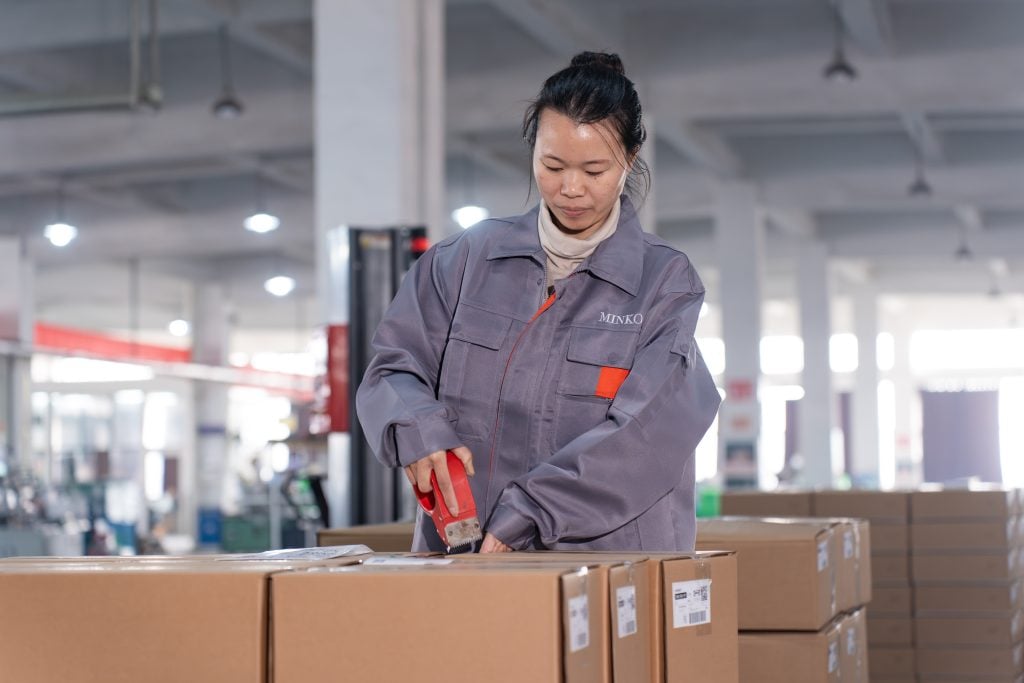
Compare measured carton volume and material use, then validate the revised pack against the actual product and shipment needs.
Packaging is part of the product cost and buying experience.
An attractive retail box still needs to protect the item through the intended distribution route. Extra empty space, unnecessary inserts or an awkward carton quantity can make the shipment harder to plan. Removing too much protection can create a different problem at the receiving warehouse.
Review the product, retail pack and master carton together. The useful question is not simply “can the box be smaller?” It is whether a proposed arrangement meets protection, retail presentation, handling and receiving requirements with less unnecessary volume or material.
Gather the packing facts before redesigning.
| Level | Information to collect | Buyer action |
|---|---|---|
| Product | Actual dimensions, weight, fragile points and surfaces that can rub. | Check the physical approved item, including accessories. |
| Retail pack | Box, sleeve, inserts, bags, instructions and set configuration. | Identify the components that provide protection or required information. |
| Master carton | External dimensions, gross weight, unit count and layout. | Use the packed-carton measurements, not an unverified estimate. |
| Distribution | Pallet, mixed-load, warehouse and last-mile handling where relevant. | Agree the appropriate validation with the buyer and test provider. |
| Receiving | Carton marks, barcode placement, pack quantities and pallet requirements. | Work from the destination or retailer’s actual instructions. |
Change one packaging variable at a time.
Consider whether an insert can be simplified, a product can nest safely, or a layout can reduce unused headspace. Keep the approved baseline so that you can compare the proposed pack against it. For ceramics, coatings and polished surfaces, check contact points and movement as well as overall fit.
A packaging change should be validated for the relevant product and distribution conditions. ISTA distinguishes screening tests from simulations of particular transport environments; the appropriate procedure depends on the purpose and shipment. See ISTA’s test-procedure guidance. Agree the actual protocol and acceptance criteria with the relevant specialists.
Worked example · Illustrative scenario
A carton layout with 10% less volume.
Assume a hypothetical order uses 600 cartons with the same unit count in each. The original carton measures 60 × 40 × 40 cm. A proposed arrangement reduces only the height to 36 cm.
| Configuration | Volume calculation | Result |
|---|---|---|
| Original carton | 0.60 × 0.40 × 0.40 m | 0.096 m³ per carton / 57.60 m³ total |
| Proposed carton | 0.60 × 0.40 × 0.36 m | 0.0864 m³ per carton / 51.84 m³ total |
The arithmetic difference is 5.76 m³, or 10%. This does not prove the new pack is safe, nor does it imply a 10% freight saving. Protection, carton strength, gross weight, loading efficiency and the applicable freight charging basis still need review.
The next decision is to make and evaluate the revised packed sample, then update the agreed packing specification if it is accepted.

Approve a packing specification, not only a box drawing.
Include the complete pack components, assembly instructions, quantities, labels, marks and measured carton details. If a lower-plastic or recycled-content claim is proposed, request the supporting information for the selected construction before the artwork is approved.
Keep a photographic packing reference that shows the sequence and contact points. This gives packing teams and inspectors a practical way to compare the production pack with the approved version.
Before approving the revised pack, confirm:
- The approved product and all accessories fit correctly.
- Protection and surface-contact risks have been reviewed.
- The selected validation has been completed and accepted.
- External dimensions, gross weight and units per carton are recorded.
- Retail labels, barcodes and carton marks remain correct.
- The buyer, factory and inspection provider have the latest reference.
Bring your buying brief to MINKO.
Send your product, current pack dimensions and receiving requirements. MINKO can coordinate packaging options with the selected manufacturing partner.
Discuss Your Project ↗Continue reading
More practical buyer guides.
Sourcing & cost
How to Compare Household Product Quotes Beyond Unit Price
Compare household product quotations on the same basis: materials, packaging, MOQ, development costs and delivery terms. Includes a worked cost example.
Read the guide ↗Development & approvals
From Sample to Production: A Private-Label Approval Checklist
Keep private-label samples, artwork and production requirements aligned with a practical approval checklist and an illustrative change-control case.
Read the guide ↗